Bridge through language – the future of military language teaching in German and French focus
On the margins of a conference
Text: Viktória Göttler | 12:29 December 8, 2025Organized by the Ministry of Defence and the Foreign Language and Terminology Centre of the Faculty of Military Sciences and Officer Training, the highly successful Professional International Conference on Challenges and Trends in Shaping Future (Military) Language Acquisition with the subheading “Building Bridges Through Language: The Future Awaits!” was recently held at the National University of Public Service. This time, we are reporting about the work of the German and French sections from another point of view.

Today, the knowledge of English and English military terminology is indispensable in the defence sphere, including the Hungarian Defence Forces, as it ensures effective international cooperation, the precise understanding of operational situations and the professional use of modern military technology. The role of domestic military higher education is inevitable in the language proficiency training of Hungarian officer cadets, so that they can confidently join Alliance tasks and tackling the challenges of the global security environment already during their studies and after graduation.
The military reform, however, has also made it clear that English in itself is insufficient, because the workings of modern, interoperable armed forces require multilingual communication and broader military language proficiency.
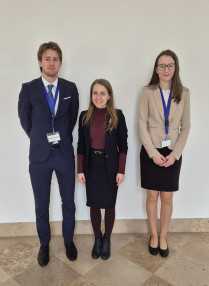
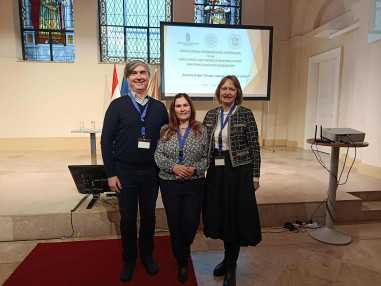
The German section focused on three fields were German military terminology plays an especially important role these days: diplomacy, terminology and military language teaching. The section was opened by Mária Wéber, one of the most outstanding experts on teaching German military terminology in Hungary. Two luminaries with wide experience in the world of diplomacy, Henrik Gergely Prőhle, Hungary’s former ambassador to Germany and Switzerland and Abdelaziz Al Qadi, a Germanist staff member of the German Embassy in Jordan shed light on the close connection between diplomatic work and military terminology.
Thanks to the procurement of German military equipment and technology, the role of the German language has significantly gained in value again in the Hungarian Defence Forces, which has also brought an upturn in teaching German and a higher appreciation for German–Hungarian terminological work. In reacting to this phenomenon, the section laid special emphasis on language pedagogy and terminology.
The lecturers representing the HDF Transformation Command reported a significant increase in the amount of terminological work due to the arrival of German military equipment. In their presentation, they talked about the challenges of terminological work and the modern (technical) ways of meeting them, the tasks of the Board of Terminological Harmonization, the workings of computer assisted translation and terminological database management software, emphasizing the key importance of terminological unity in today’s Hungarian Defence Forces.

The organizers are convinced that successful language teaching is a key to professional successes in the Hungarian Defence Forces, too, so they did their best to introduce the topic on the widest spectrum possible. The part on language pedagogy included the characteristics of teaching German in secondary schools, the current practice of teaching military terminology, and the features of the related examination in the special terminology.
They presented the results of a research into the motivations and difficulties of soldiers learning military terminology, and spoke about the changing geographical emphasis in the use of German military terminology. The content of the discussions was enriched with personal experiences as well, when civilian students described the challenges in acquiring military terminology.
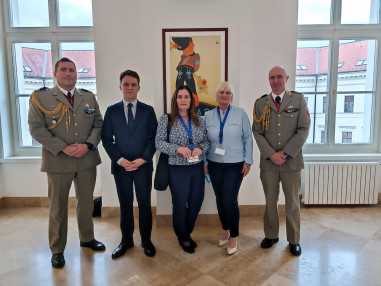
The French section was opened by Matthieu Berton, Cultural and Cooperation Advisor at the French Embassy in Hungary and Director of the French Institute in Budapest. In his lecture, he pointed out the gradually increasing role of French by presenting the aims of the Organisation Internationale de la Francophonie (OIF), the International Organization of la Francophonie bringing together more than 90 countries, of which Hungary has been a member since 2004 in observer status. Currently there are some 321 million speakers of French worldwide, mainly in Africa, Europe and North America – with this, French is ranked fifth among the most frequently spoken languages in the world.
Also in attendance at the conference were Maud Launay, Attaché for Educational Cooperation and Sports at the French Embassy in Hungary; Colonel Stéphane Loechleiter, French Defence Attaché; and Lieutenant Colonel Jehan Hartmann, French Deputy Defence Attaché.
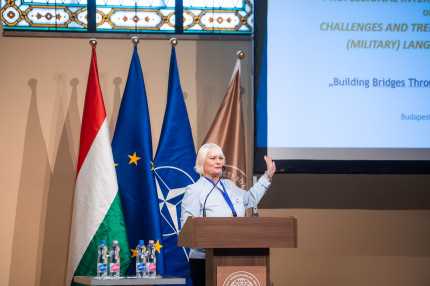
The weight of the French language in international circles is indicated by the fact that it is the second official language of NATO and one of the six official languages of the UN. Due to historical traditions, French also plays a special role in military diplomacy, and also serves the Hungarian troops’ service in missions abroad very well.
Besides the development of teaching French military terminology in Hungary, the topics on the agenda of the discussions also included the relationship between security and defence policy and higher education, the French Africa-policy, the situation of teaching French in West and Central Africa, the survivability of the Hungarian Defence Forces within the framework of NATO and the milestones in strengthening French–Hungarian scientific relations in the topic of the law of outer space. Thanks to its international character, the NATO Survival, Evasion, Resistance, Extraction (SERE) Course offered at the HDF NCO Academy has already welcomed participants from the French-speaking world as well.