Hungarian officer attends air defence training in the USA
Text: HDF 205th Air Defence Regiment | Photo: by the unit | 14:28 March 23, 2026Lieutenant Milán Kacsmarik, an officer of the HDF 205th Air Defence Regiment recently participated in the Air Defense Artillery Basic Officer Leader Course (ADA BOLC) organized for US Air Defense Artillery (ADA) officers at the Fires Center of Excellence, Fort Sill army training base, Oklahoma, USA. The objective of the almost two-month training was to prepare young officers for their Air and Missile Defense (AMD) Platoon Leader position, while providing them with a comprehensive picture of the core leadership principles and professional tasks of this branch of service.
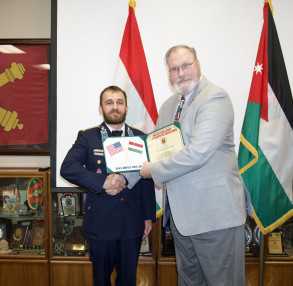
The course included academic training and also practical tasks to be carried out in the field. In the first phase of the training, the emphasis was laid on platoon-level leading skills, which were later applied in a practical environment as well. The module closed with an exercise simulating realistic circumstances in the field.
The next phase of the program was dedicated to teaching the theory and practice of air defence missile systems. The training also focused on countering small unmanned aerial systems (C-sUAS), during which the participants learned about the tactics, techniques and procedures used in C-sUAS activities.
“The course provides a solid basis for international students to have an insight into the platoon leaders’ air defence tasks and skills. Besides raising the professional standards of knowledge and practicing international cooperation, it has provided us with an excellent opportunity to develop English language skills in a native-speaker environment” – said Lieutenant Milán Kacsmarik.
During the course, the lieutenant was given an insight into the basic tactical-technical characteristics of US air defence systems. In his experience, the knowledge he gained can be utilized in multiple fields within the training system of the Hungarian Defence Forces, especially in teaching the use of very short-range air defence (VSHORAD) systems. He emphasized that today the development of counter-drone capabilities has special significance, and the lessons learned during the American training may contribute to it as well.
The lieutenant underscored that the practical part of the training is particularly memorable to him, because it opened up the opportunity to strengthen cooperation and cohesion among participants to a greater extent than the classroom sessions. Getting acquainted with the equipment not in service in Hungary was another significant experience for him, especially as he had a chance to test the AI-based Smartshooter optic scope developed for counter-UAS missions.
The greatest challenge of the training and the stay abroad was posed by the different time zones, which made it more difficult to contact those at home.
All in all, the lieutenant deemed the lessons learned in the international training environment to be very useful. He had opportunity to learn about the mindset and organizational functioning of soldiers of other nations and to consult several seasoned leaders who gave him valuable advice to further his professional development.


