NATO and the EU focus on strengthening the armed forces
Text: HDF Defence Staff | Photo: nato.int | 12:08 May 26, 2026“Both NATO and the European Union are concentrating on force development, the strengthening of defence industry and the preparation of the armed forces, while also looking for solutions to settle ongoing conflicts” – stated General Dr. Gábor Böröndi, Chief of HDF Defence Staff after attending the European Union and NATO Military Committee in Chiefs of Defence Session held in Brussels.
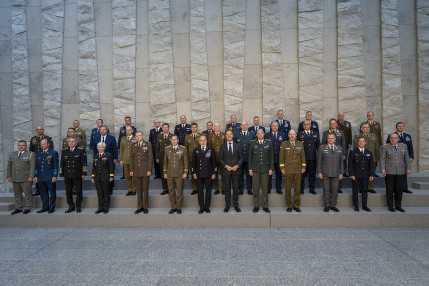
The Hungarian Chief of Defence said that the two-day discussions had centered on the security challenges of the Euro-Atlantic region, the lessons learned in the Ukraine war, as well as the development of allied and European capabilities. The NATO military leaders reviewed the possibilities for strengthening deterrence and defence, the ongoing operations, and the Alliance’s adaptation to the rapidly changing security environment.
General Böröndi emphasized that in the future, Europe must assume a much more significant role in tackling the security challenges of the continent and the world. The chiefs of defence of EU member states agreed that it is not yet time for generating an independent European military capability; but then again, Europe must react to the present threats with stronger armed forces and greater contribution.
Providing continued support to Ukraine was a key topic the NATO session. The chiefs of defence agreed that although NATO is not involved in the conflict, Ukraine could not resist the Russian aggression in the long run without the support of individual member states.
The participants put special emphasis on discussing how to incorporate the lessons learned in the Russo-Ukrainian War into the workings of the Alliance. To NATO, the issues of strategic importance include digitization, the military use of new technologies, as well as the development of modern battle management and command and control (C2) systems.
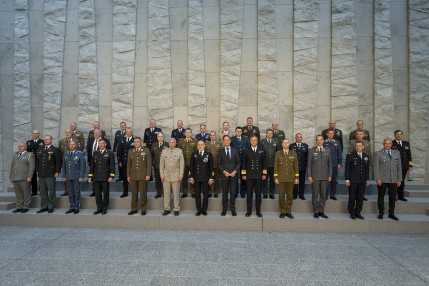
At the opening of the session, NATO Secretary General Mark Rutte emphasized that the forces the Alliance has must be able to react to any potential conflict situation with adequate armaments, modern technology and well-prepared personnel.
During the discussions, an important item on the agenda was the security situation of the Middle East with special regard to the region of the Strait of Hormuz and the conflict between Iran and the United States.
The Hungarian Chief of Defence recalled that the United States has made it clear that it attaches great significance to the standpoint of its European allies on the America–Iran conflict, and considers it a kind of tensile test from the point of view of transatlantic relations. The participants of the meeting discusses the areas and systems of equipment the European allies can contribute to the management of the crisis as well as the role they may assume in maintaining regional stability.
Besides the Russo-Ukrainian War, the topics of discussion at the EU Military Committee session included the development of European defence industry, the current state of EU military missions, as well as the joint directions of capability development. The participants also explored the possibilities for the European Union to accelerate production in the defence industry and further strengthen the defence capabilities of the continent.


