Precision strikes – a guarantee of deterrence and success
Text: HDF Defence Staff | Photo: NATO, Captain Milán Gajdos | 15:21 June 19, 2026“NATO considers the development of its Deep Precision Strike capabilities one of its most important tasks for the coming years” – this is how General Zsolt Sándor, Chief of HDF Defence Staff summed up the primary message of a symposium held with the participation of military leaders of the North Atlantic Alliance held in Mons, Belgium. In his opinion, the conclusions of the meeting are of key significance for the further operational planning and capability development tasks of the Hungarian Defence Forces.
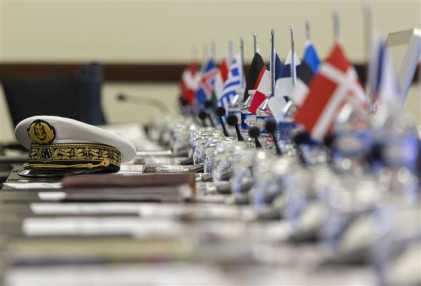
This was the first-ever Deep Strike Symposium in NATO’s history. Convened by NATO’s Supreme Allied Commander Europe (SACEUR) General Alexus G. Grynkewich, the professional forum brought together chiefs of defence, leaders of NATO’s Allied Command Operations (ACO) and Allied Command Transformation (ACT) as well as representatives of the defence industry, who discussed the role of Deep Precision Strike (DPS) capabilities in the collective defence plans of the Alliance.
The Hungarian Chief of Defence said that in his speech, General Grynkewich pointed out that “NATO is a defensive Alliance. In order to deter, we must demonstrate strength through credible capabilities and readiness, but we must also have a credible and militarily sound plan for employing these capabilities.”
The lessons from current conflicts – especially the War in Ukraine and the Iran crisis – have shed light on the increasing significance of high-precision strikes carried out in strategic depth. The symposium addressed the operational use of DPS capabilities, the future directions of development, and the possibilities for expanding and accelerating defence industrial production. The participants also gained first-hand information from an Ukrainian lecturer.
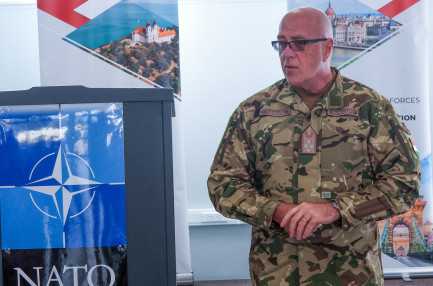
The ongoing conflicts have practically confirmed that we need to be able to shoot at the farthest possible targets as precisely as we can. Long-range fires and precision are absolutely crucial. If these capabilities are coupled with a large amount of assets, then the strikes will have an immediate effect on front-line troops and may even decide the outcome of the war” – stated General Zsolt Sándor, highlighting that warfare has changed in the recent period with the emphasis shifting from conventional artillery to drones and deep missile strikes.
The development of Deep Precision Strike capabilities is the collective task of all Allied nations. “SACEUR’s main message is that we need to generate and develop these capabilities in our own armed forces as quickly as possible. The combined capabilities will provide NATO’s strike power, which is one of the pillars of deterrence besides being a precondition for successfully fighting a potential conflict” – said the Chief of Defence.
According to General Sándor, while much of the discussion centered on physical capabilities, SACEUR also highlighted something just as important in modern warfare, namely, data.
The Hungarian general quoted SACEUR as saying that “Whoever is able to access the right data, move it more quickly, apply more effective algorithms to it, is going to have decision advantage. That is what will allow them to use whatever set of kinetic or non-kinetic capabilities they are employing more effectively, and faster.”
General Zsolt Sándor emphasized that the symposium was useful and important from several aspects. On the one hand, the Hungarian Defence Forces must continue their planning tasks, including operational planning, by using the lessons of the symposium. On the other hand, this has been the first occasion on which he officially participated in a forum of NATO military leaders since his appointment as Chief of Defence, and he also had the opportunity to hold bilateral discussions as well. General Sándor held separate discussions with SACEUR as well as with his German and Canadian counterparts.
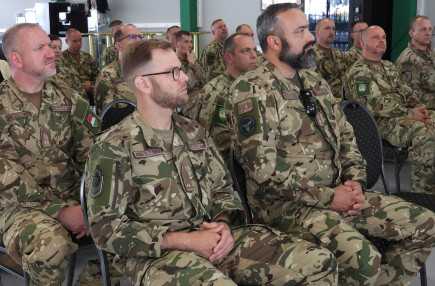
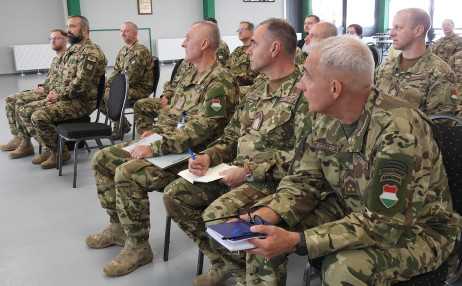
The Chief of Defence had previously held a briefing for Hungarian service members at Supreme Headquarters Allied Powers Europe (SHAPE). At the staff meeting, he told them that he expects them to serve with conscience, integrity and honor. He reiterated his creed that “humans are in the center”, and said that in this spirit, the HDF Defence Staff strives to assist Hungarian service members with their activity on their tours of duty abroad, support their families, and puts the homecomers in positions matching their practice and experience.