Strengthening Collective Security
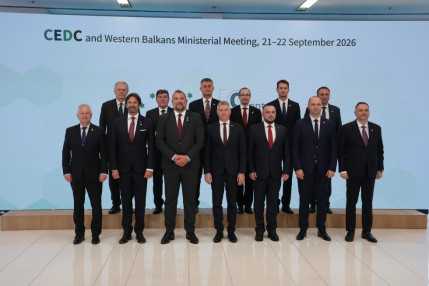
Text: Ministry of Defence | Photo: Bruno Toič | 12:52 September 23, 2026“Central Europe’s strength lies in its cooperation with its partners,” stated László Kürtös, Parliamentary State Secretary and Deputy Minister at the Ministry of Defence, at the Central European Defence Cooperation (CEDC) and Western Balkans Ministerial Meeting held in Slovenia on September 21–22.
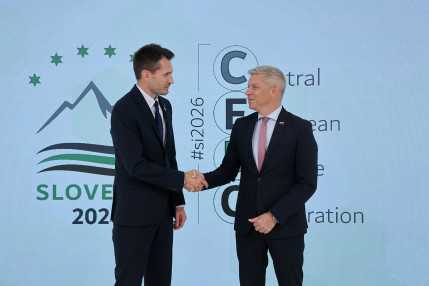
The central theme of the first session was the European security strategy and defence preparedness. The global security environment is characterized by an increasingly tense atmosphere: in the case of the Russo-Ukrainian War and the conflicts in the Middle East, there are no signs of peace on the horizon; meanwhile, Russia is testing Europe’s response capabilities with a series of hybrid attacks.
The parties agreed that developing a unified and coordinated European approach is key to maintaining the continent’s long-term stability and security. The meeting concluded with the presentation of the Balkan Medical Task Force, during which Albania, Bosnia and Herzegovina, North Macedonia, Montenegro, Serbia, and Slovenia committed to providing each other with military medical assistance in the event of a crisis.
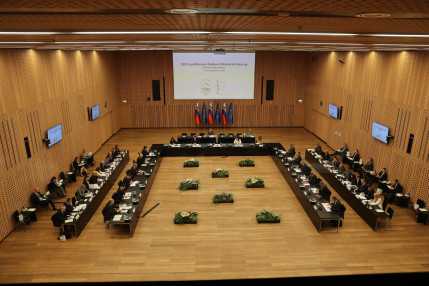
Representatives from the countries of the Western Balkans were also invited to the second working session. The participants emphasized that the region continues to be of crucial importance to the security of the European Union, particularly with regard to addressing migration challenges: in the wake of the recent migration crisis in Ceuta, the need for European countries to strengthen their southern borders has once again come to the forefront.
Hungary has reinforced its commitment to promoting the European integration of the Western Balkan countries, a position it also advocates in the development of the new European Security Strategy. László Kürtös, Parliamentary State Secretary, stated that, in order to maintain security in the region, Hungary continues to support the KFOR peacekeeping mission in Kosovo and the EUFOR Operation ALTHEA in Bosnia and Herzegovina.
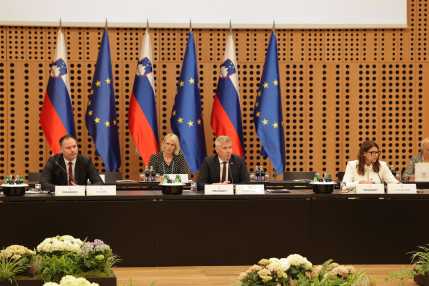
At the meeting, Austria briefed the participants on the current status of the process to establish the Western Balkans Security and Defence College, which aims to provide unified training for the region’s armed forces based on European values. To advance the project, Hungary proposed the option of “constructive abstention” for countries that remain uncertain.
Regarding the war in Ukraine, the parties agree that peace is needed as soon as possible. Hungary supports all peace efforts aimed at ending the war. At the same time, with regard to Ukraine’s integration into the European Union, Hungary emphasized that this must not push to the background the EU accession process of the Western Balkan countries.
At the conclusion of the event, a joint statement was signed reaffirming closer defence cooperation among the countries of Central Europe and the Western Balkans, the strengthening of military preparedness and interoperability, and the development of military mobility and defence industry cooperation.